Dr. Vasa Radonic
Project coordinator
Location:
BioSense Institute, University of Novi Sad
Dr. Zorana Đinđića 1, 21000 Novi Sad, Serbia
Dr. Vasa Radonic
Project coordinator
Location:
BioSense Institute, University of Novi Sad
Dr. Zorana Đinđića 1, 21000 Novi Sad, Serbia
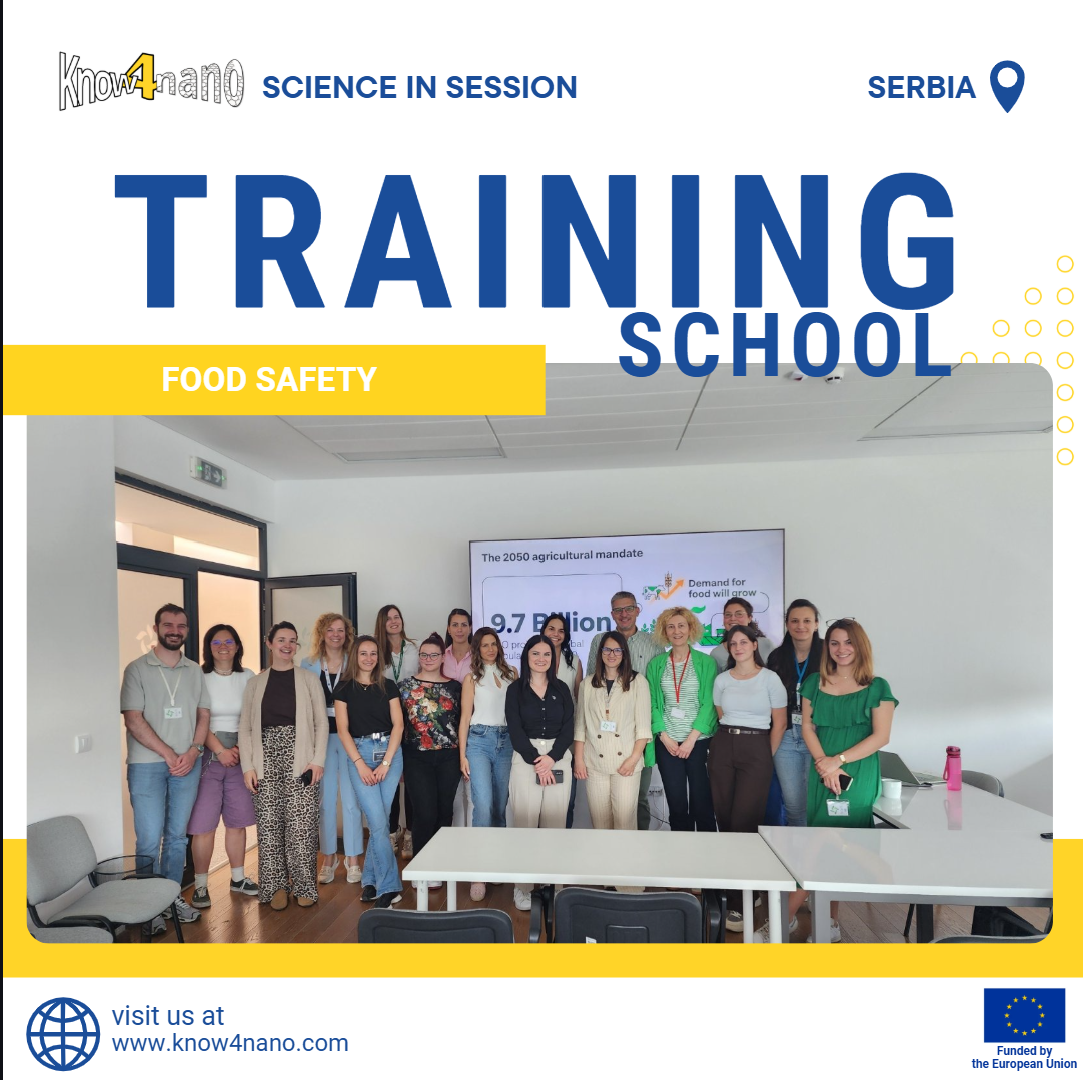
The Know4Nano Training School entitled “Advanced Methods and Trends in Food Safety Control” was successfully held at the BioSense Institute, bringing together researchers for three days of intensive learning, practical training, and knowledge exchange in the field of food safety.
The program covered a broad range of topics, from microbiology and molecular detection techniques to food contaminants, analytical methods, biosensors, and emerging challenges in food safety monitoring.
The first day focused on fundamental microbiological concepts and practical laboratory training. Participants attended lectures and hands-on sessions delivered by Dr. Ljiljana Janjušević, Dr. Mila Đisalov, and Ana Kuprešanin, covering microbiology, biosafety regulations, microbial cultivation, and the application of Loop-Mediated Isothermal Amplification (LAMP) in pathogen detection and biosensing.
The second day featured lectures from experts representing academia, research institutes, and industry. Dr. Vasa Radonić, Dr. Dragoljub Cvetković, Dr. Ilija Brčeski, Dr. Ivan Nastasijević, Dr. Jovana Kos, and Dr. Jelena Miljanić shared their expertise on current and emerging challenges in food safety, including foodborne pathogens, heavy metal contamination, meat safety testing, mycotoxins, climate-related risks, and biosensor technologies. The day concluded with a panel discussion addressing food security challenges and the evolving quality control needs of the food industry.
The final day was dedicated to online lectures delivered by experts from the National Research Council of Italy (CNR). Dr. Paola Italiani presented analytical strategies for lipopolysaccharide (LPS) detection, while Prof. Rachele Isticato discussed bacterial spore formation and advanced technologies used for their detection and characterization.
Through a combination of theoretical lectures, practical laboratory work, and interactive discussions, the Training School provided participants with valuable insights into modern approaches for food safety monitoring and control. The event further contributed to strengthening expertise and research capacities at the BioSense Institute, supporting Know4Nano’s mission of advancing scientific excellence and innovation in biosensing, nanotechnology, and food safety.
The Know4Nano consortium would like to thank all lecturers and participants for their valuable contributions and engagement throughout the Training School.